Read it: Unstructured Data
Unstructured Data is information in documents, scans, slides and emails.
CPLT makes it readable by AI, with page references.
Every CPLT project follows four steps.
Only 29% of organisations surveyed by BARC fully know where the unstructured data their AI uses is kept. CPLT shows you where yours is, for every file it labels.
Unstructured Data is information in documents, scans, slides and emails.
CPLT makes it readable by AI, with page references.
Meta Data labels each file’s owner, sensitivity, which version is current and allowed AI services.
You receive a file map.
Positive Data is data your team has approved: current, with a named owner.
You receive a clear list: ready, or tidy first.
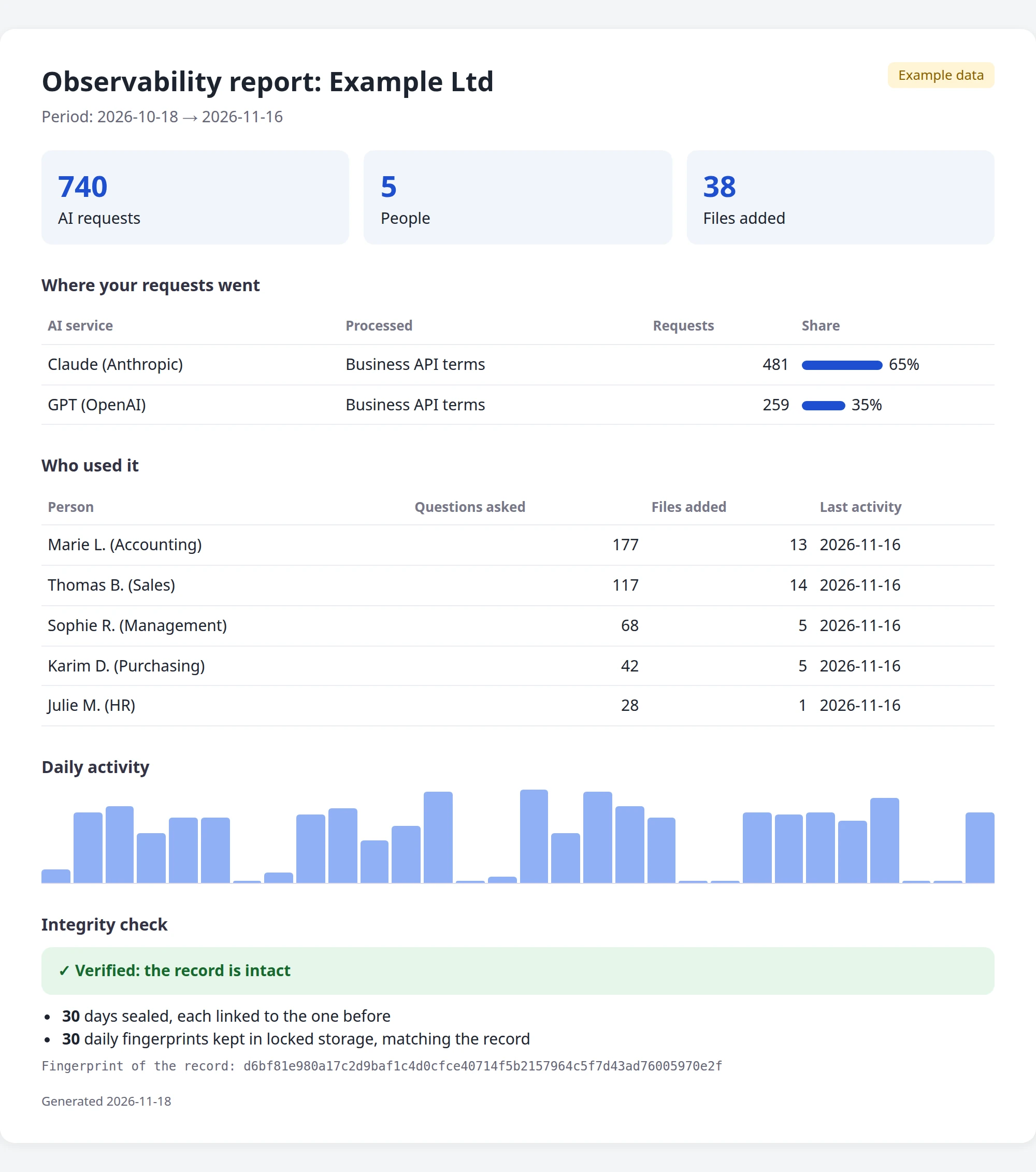
Observability records AI requests through the workspace CPLT sets up.
Requests are recorded and sealed daily; daily fingerprints are kept in locked storage. You receive a report.
Scroll across the report to read the detail.